Prospera at Women Deliver 2026: Shaping Conversations on Resourcing and Accountability
From plenaries to movement spaces, Prospera members pushed forward conversations on resourcing, accountability, and feminist futures.
At the Women Deliver 2026 Conference, Prospera members brought a strong, coordinated presence across plenaries, side events, and movement spaces, shaping critical conversations on resourcing, accountability, and feminist futures.
Setting the Tone: From Defense to Disruption
On the first day of the conference, Françoise Moudouthe, CEO/Executive Director of the African Women’s Development Fund AWDF and Board Co-Chair of Prospera, named the political task ahead for feminist movements: to defend hard-won gains, disrupt the forces driving backlash, and actively define the futures they are already building.
Speaking at the opening plenary, “From Resistance to Renewal: Seizing the Moment to Build a Feminist Future,” her message was both hopeful and urgent:
“I get so much hope from movements — strong, connected, grounded movements.”
But this hope also came with a clear call to action: to move beyond reacting to crises and actively shape what comes next.
“We must defend what we have obtained… We must, together, disrupt… And the third D is defining our feminist futures.”
This framing draws directly from AWDF’s broader political analysis: defending gains, disrupting power, and defining feminist futures.
Importantly, Francoise also pointed to a critical gap in the current funding ecosystem: the lack of investment in the infrastructure of togetherness that sustains movements over time:
“That togetherness is not going to be an automatic by-product… It needs careful investment… that’s what’s going to keep us together, and that’s what’s going to make the change.”
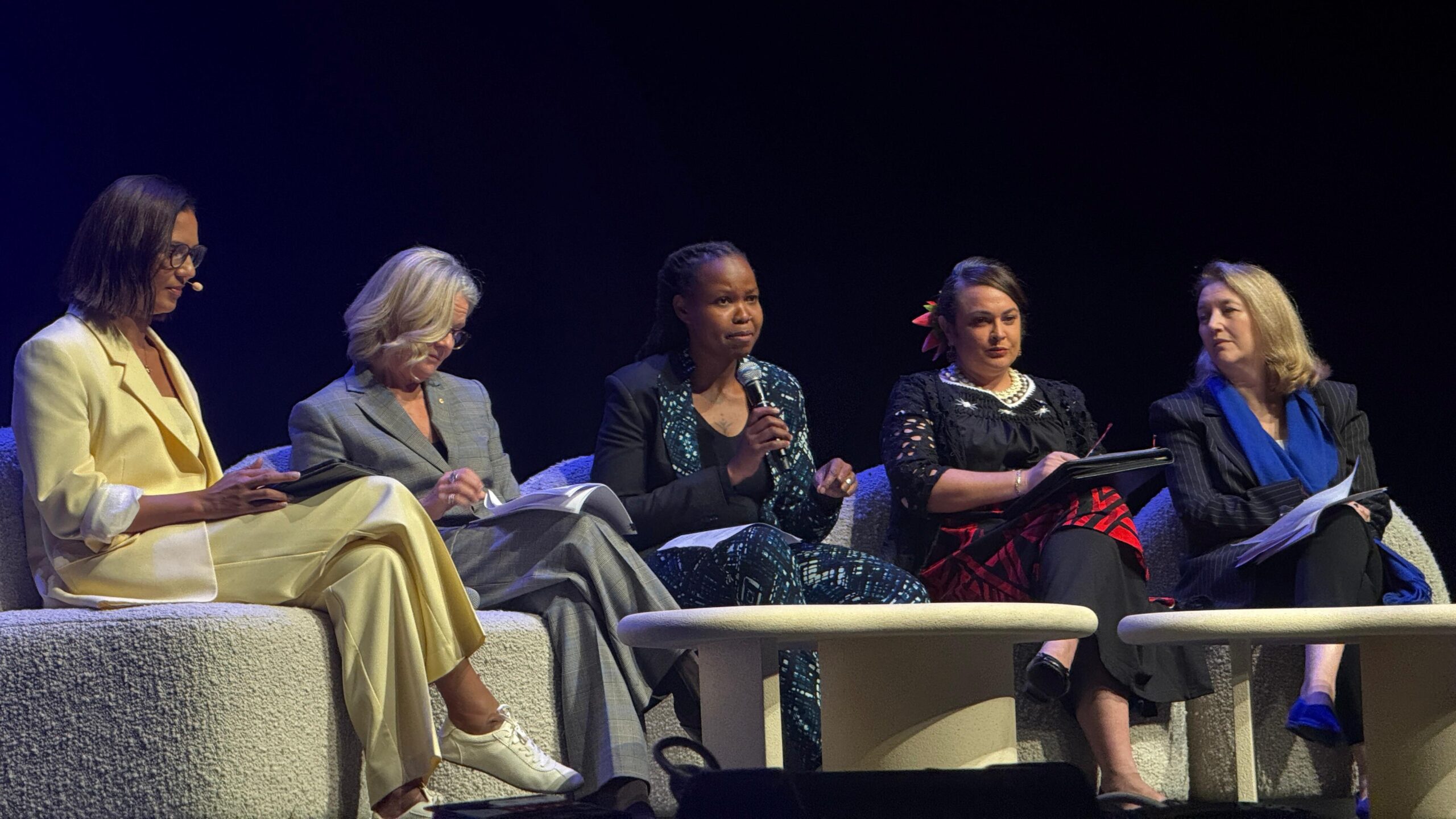
Françoise Moudouthe, CEO/Executive Director of AWDF and Prospera Board Co-Chair, speaking at the opening plenary, “From Resistance to Renewal: Seizing the Moment to Build a Feminist Future.”
Centering Feminist Resourcing as Critical Infrastructure
From the pre-conference sessions and throughout the three days of Women Deliver 2026, Prospera members and Secretariat led and contributed to conversations that centered feminist resourcing as essential infrastructure for transformative change.
These discussions moved beyond diagnosis, offering concrete pathways for how resources, power, and decision-making must shift to meet the realities movements are navigating.
Prospera members also marked key movement milestones, including Leading from the South’s 10-year celebration, which honored a decade of feminist funding rooted in trust, solidarity, and movement leadership, as well as the Urgent Action Sister Funds’ launch of an in-depth academic study rethinking how crisis response is resourced. The research makes clear that crisis response is not failing because solutions are absent, but because funding is not scaling the solutions that already exist.
Together, these moments showed the strength of the network: bringing diverse regional perspectives into shared spaces, reinforcing common priorities, and shaping global agendas on how feminist movements are resourced.
Resourcing Hub: From Dialogue to Direction
At the Resourcing Hub, hosted by the Alliance for Feminist Movements in partnership with AWID, Prospera, and the Walk the Talk Consortium, Prospera members and Secretariat hosted and co-created spaces for deeper engagement on the future of feminist funding.
Discussions explored post-ODA realities, the practical role of women’s and feminist funds in shifting power and resources, and the importance of collective action for resourcing.
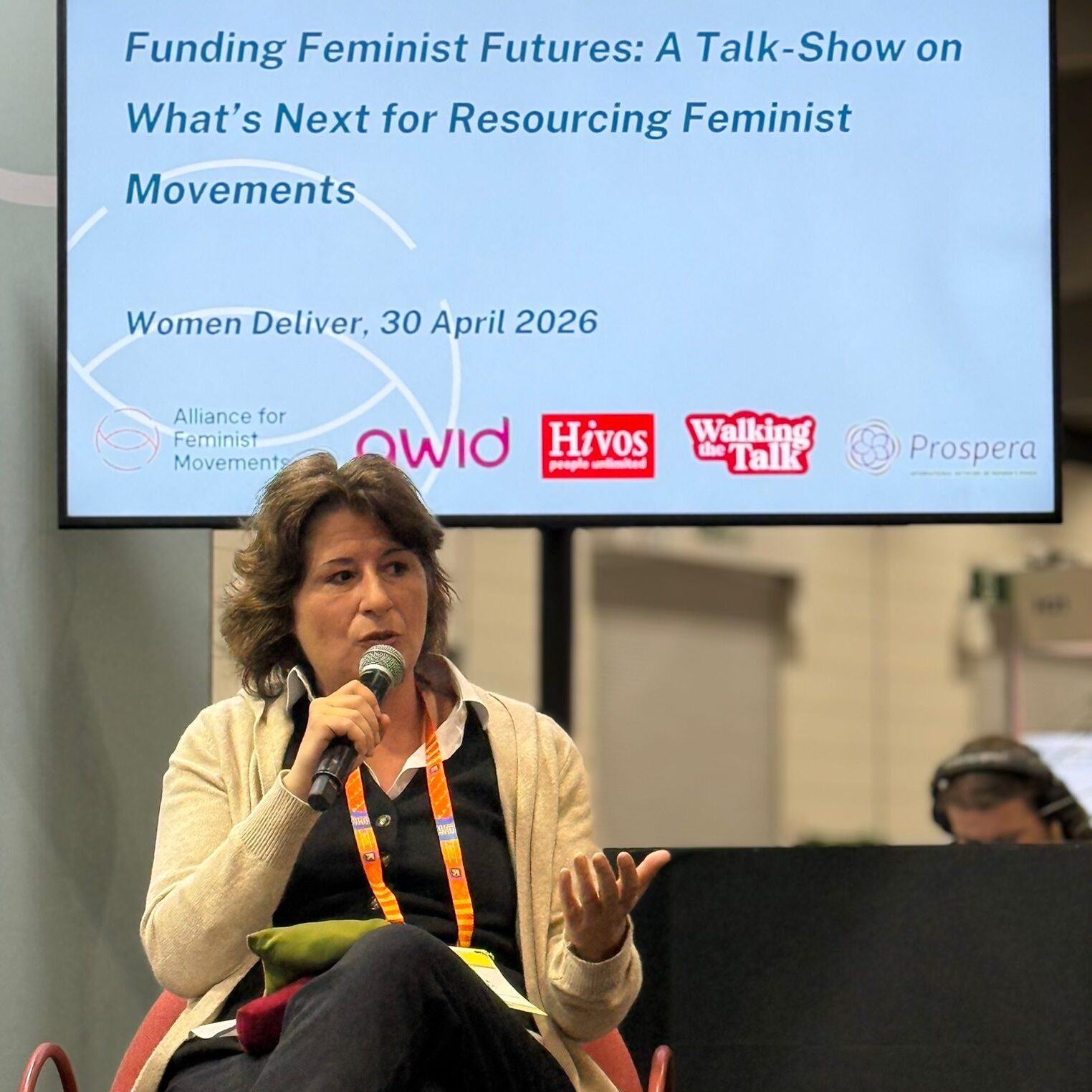
In the session Funding for Feminist Funds and Movements in a Post-ODA World, Djurdja Trajkovic, Prospera’s Board member and the ED of Reconstruction Women’s Fund emphasized the need to rethink convenings so they better respond to the needs of movements. The Accelerate Together: The Power of Collective Action for Resourcing session centered feminist movements as experts on their own needs and visions, while building a shared, concrete picture of what an additional $600 million annually could make possible. In Feminist Funding in Practice, Prospera created an interactive space for members, feminist organizations, and activists to exchange on feminist funding models, good practices, and the role of women’s and feminist funds in moving resources closer to movements.
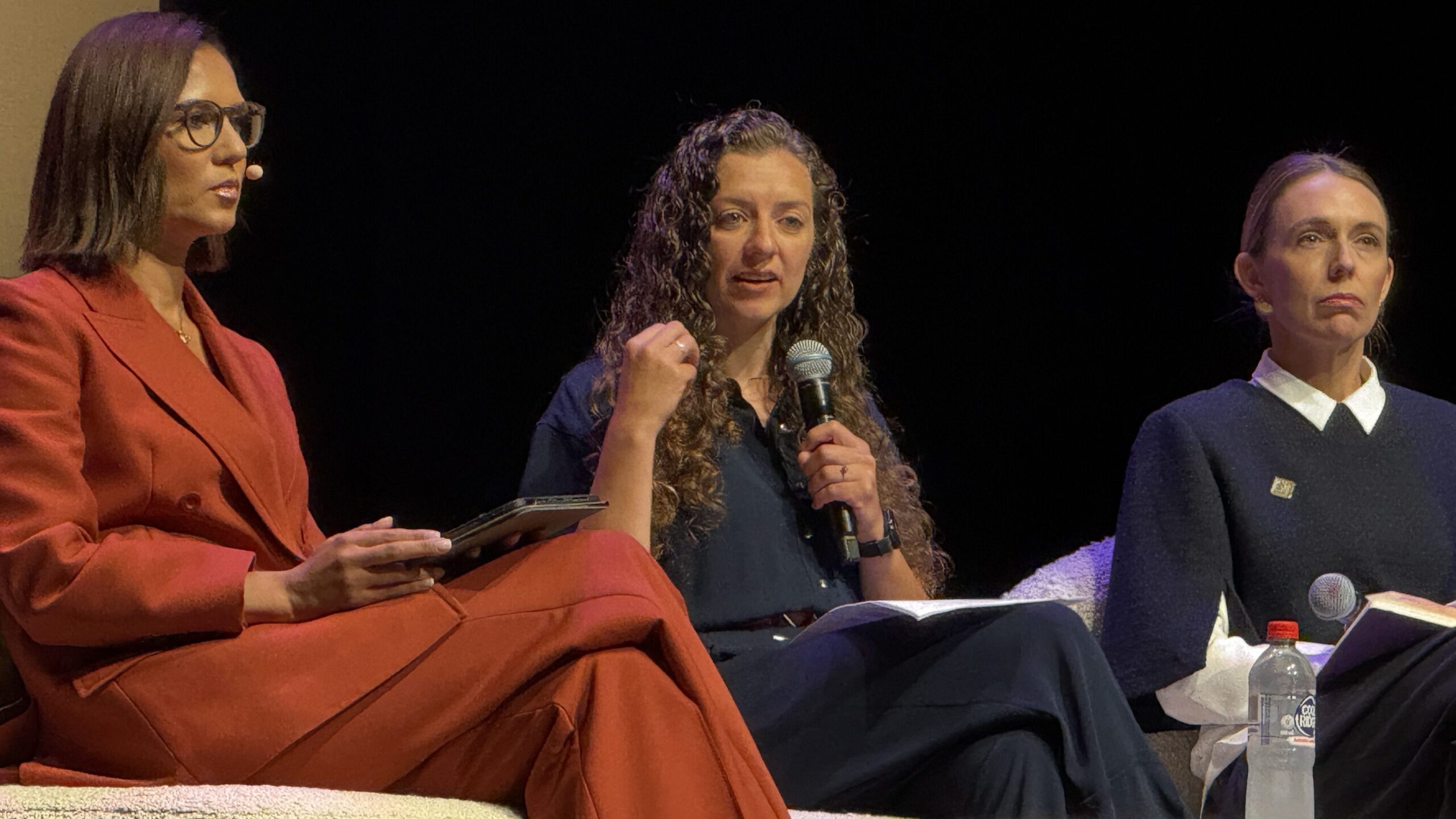
Djurdja Trajkovic, Prospera Board Member and Executive Director of the Reconstruction Women’s Fund, speaking during “Funding for Feminist Funds and Movements in a Post-ODA World.”
Celebrating Indigenous and First Nations Leadership
Across member-led sessions and side events, Indigenous and First Nations feminist leadership was central to conversations on justice, climate, and resourcing.
Prospera members led and contributed to discussions that highlighted how Indigenous women and First Nations leaders are advancing community-rooted solutions in the face of climate pressures, economic marginalization, and shrinking civic space, while continuing to be under-resourced within global funding ecosystems.
As reflected in Prospera’s Alliance Magazine article on Pacific feminist leadership and resourcing, feminist movements across the Pacific are already driving transformative change in the face of climate pressures, fragile economies, shrinking civic space, and limited access to basic services. However, the funding ecosystem remains far from meeting these complex realities.
“We ask funders to match the scale of the challenges with the scale of resourcing required, backing Pacific feminist movements with the stability and autonomy they need to drive transformative change.” — The Pacific Feminist Fund
Resourcing Feminist Futures: Shifting How Money Moves
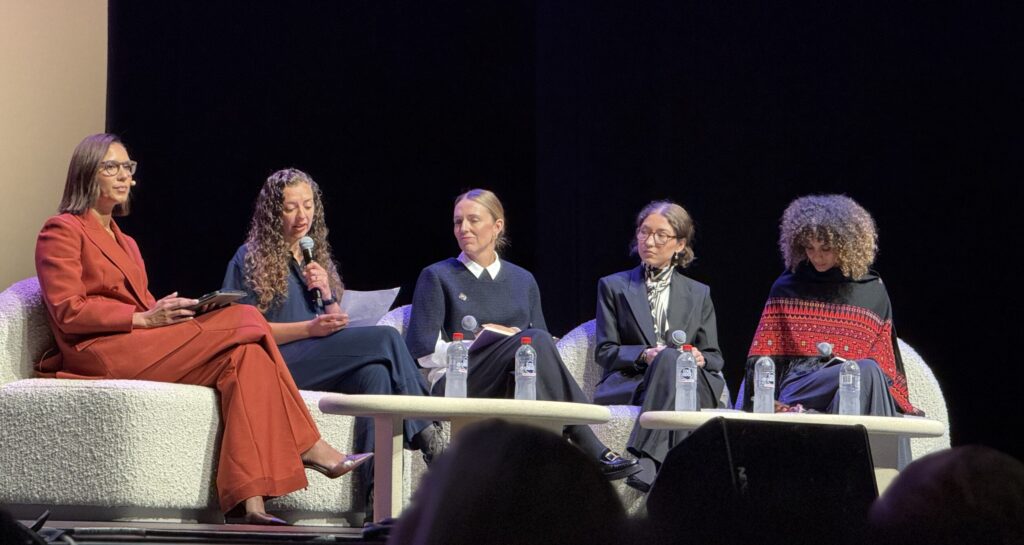
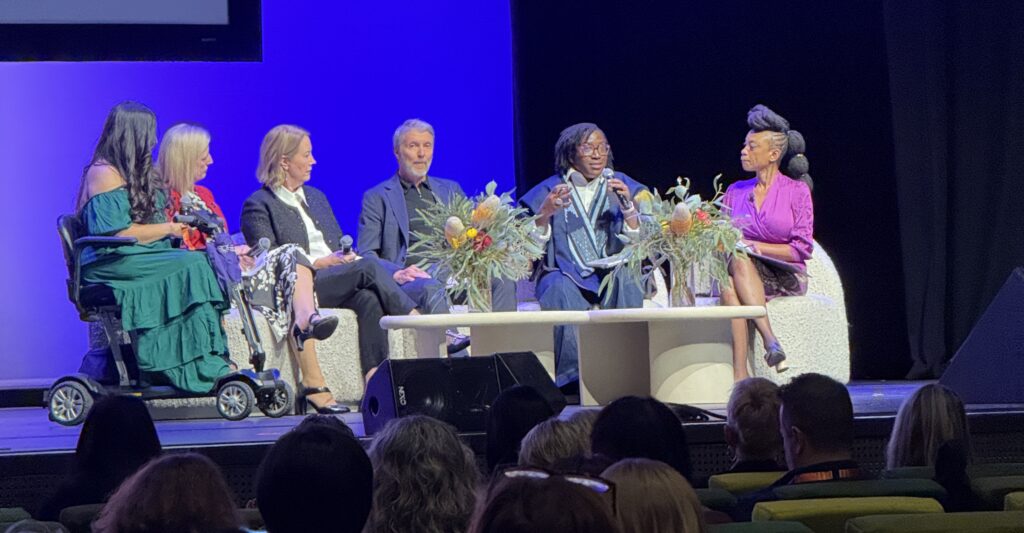
A central moment of the conference was the plenary “Resourcing Feminist Futures: Power, Politics and the Future of Funding.” Prospera members took the stage as architects of a different vision for funding.
Their interventions called for a fundamental shift in how resources move, who controls them, and what accountability means in practice.
As Happy Mwende Kinyili, Executive Director at Mama Cash, emphasized:
“Feminist movements are proven engines of lasting change… investment in feminist movements is a force multiplier, advancing climate resilience, democratic participation, community safety, and economic stability.”
Virisila Buadromo (Urgent Action Fund Asia & Pacific) reinforced the urgency of shifting funding flows:
“If we are serious about equity and justice, we have to change how resources move… Direct the current. Make sure money, time, and support land with the people already doing the work—and stay there.”
Jess Tomlin (Equality Fund) pushed further on what transformative funding requires:
“This is about renegotiating what money needs to look like… funding an intersectional, multidimensional, multidirectional body of work.”
And Anisha Chugh (Women’s Fund Asia) brought a movement-wide call to action:
“Our pushback must be about coming together… building more radical collaborations across movements, funds, NGOs, and philanthropy. All of us need to be in this together.”
Together, these contributions articulated a shared agenda: moving from fragmented, project-based funding toward long-term, flexible, movement-centered resourcing.
Happy Mwende Kinyili (Mama Cash) speaking on the Accelerate Together campaign at the WD2026 Resourcing Plenary.
Accountability in Times of Crisis and Conflict
At the plenary “Women Are Not Negotiable: Conflict, Power, and Accountability,” Prospera’s Executive Director Laila Alodaat challenged dominant narratives of accountability in humanitarian and conflict settings.
Her intervention questioned who systems are truly accountable to, and what it would mean to center accountability around people and communities living with the consequences of violence.
Laila reminded us that accountability cannot remain a value on a billboard or a word in a mission statement. It must be a process of repair, rooted in the belief that every human life has worth. This is also the accountability that women’s and feminist funds put into practice: resourcing movements with trust, proximity, and respect.
“WFFs are the communities’ attempt at taking control over resources, to do that, the movement created a feminist funding infrastructures that move resources in proximity, make decisions within communities, and provide the flexible support needed for both immediate needs and long-term transformation. and they are growing, as is their impact. In 2024, 55% of grassroots movements reported that women’s and feminist funds were among their main sources of funding. Now THAT is what true accountability and repair looks like.”